Lash Fill Policy: Set Rules That Prevent Booking Disputes
A lash fill policy should do more than say “book every two to three weeks.” Set clear eligibility, pricing, timing, and exception rules before a client arrives.

Key takeaways
- Set both a time window and a retention requirement instead of relying on either rule alone.
- Explain exactly when a fill becomes an extended fill, foreign fill, or full set.
- Put the policy beside the service before clients pay or reserve an appointment.
- Use consistent booking, client, payment, and cancellation records so staff can apply the same rule every time.
What should a lash fill policy say?
A lash fill policy should answer one question before the client books: “Am I eligible for a fill, and what will I pay if I am not?” The clearest policies define the booking window, minimum lash retention, foreign-fill rules, late-arrival consequences, and what happens when the appointment needs more time than the selected service allows.
A workable starting point is a regular fill within two to three weeks of the previous appointment, with a minimum retention threshold such as 40% to 50%. Those numbers are common examples, not universal rules. Adjust them to your application method, service length, pricing, and the amount of work your team can complete safely in the booked slot.
The policy also needs a customer-facing explanation. “Less than 40% becomes a full set” may be operationally useful, but clients need to know how the decision is made, when they will be told, and whether an extended fill is available. The Federal Trade Commission says material cancellation and refund terms should be presented clearly before payment, not revealed only after a customer objects. (search.ftc.gov)
Build the policy around five decisions
Write the rules in the order a client experiences them. That keeps your lash extension fill policy practical instead of turning it into a long block of legal language.
- Timing: State how many days or weeks after the last appointment qualify for a regular fill. Use a specific cutoff, such as “on or before 21 days,” rather than “about three weeks.”
- Retention: State the minimum amount of extensions that must remain after grown-out lashes are removed. A range can work, but your team needs one internal standard for deciding.
- Service level: Explain what happens below the regular threshold. Offer an extended fill when realistic, or direct the client to a full set when the remaining work cannot fit the service.
- Outside work: Say whether you accept foreign fills. If you do, explain that removal, correction, extra time, or a different price may be required after assessment.
- Appointment conduct: Cover clean lashes, late arrivals, cancellations, no-shows, and the deadline for reporting an application concern.
Avoid making the time rule do all the work. A client can return after 14 days with poor retention, while another can return after 21 days with enough extensions for a normal fill. The appointment should be classified by both elapsed time and actual work required. That is the specific situation where a simple “two-week fill” rule breaks down.
If you accept deposits or cancellation fees, keep those terms in the same booking flow as the lash service. Stripe’s dispute documentation identifies the cancellation policy, refund policy, policy disclosure, service date, and service documentation as useful evidence when a cardholder challenges a payment. (docs.stripe.com)
Choose the right fill window and retention rule
Clients searching “how many weeks for a lash fill” usually want a simple number. Give them one, but show where it stops applying. Many studios use a two- to three-week window for regular fills, then move clients to an extended fill or full set. The correct cutoff depends on the set, the artist’s timing, the client’s retention, and whether the service menu has enough appointment length to handle heavier work.
A useful policy separates these categories:
- Regular fill: booked within your normal window and above your minimum retention level.
- Extended fill: still within the acceptable window, but below regular retention and requiring additional appointment time.
- Full set: outside the maximum window, below the minimum workable retention, or too grown out to refill safely and evenly.
- Foreign fill: extensions applied by another artist, subject to inspection and possible removal before new work.
Do not promise that a full set will always be charged solely because a client is one day past the cutoff. If your actual appointment schedule allows an extended fill and the lash condition is appropriate, staff may have room to use judgment. If you want a firm rule, state that the cutoff is based on the appointment date, not the booking date, and apply it consistently.
The policy should also explain what happens when the client books the wrong service. For example: “If you arrive below the regular-fill requirement, your artist will assess the lashes before starting. We may convert the appointment to an extended fill or full set if time and lash condition require it. Any price change will be explained before work begins.” That sentence prevents a surprise at checkout.
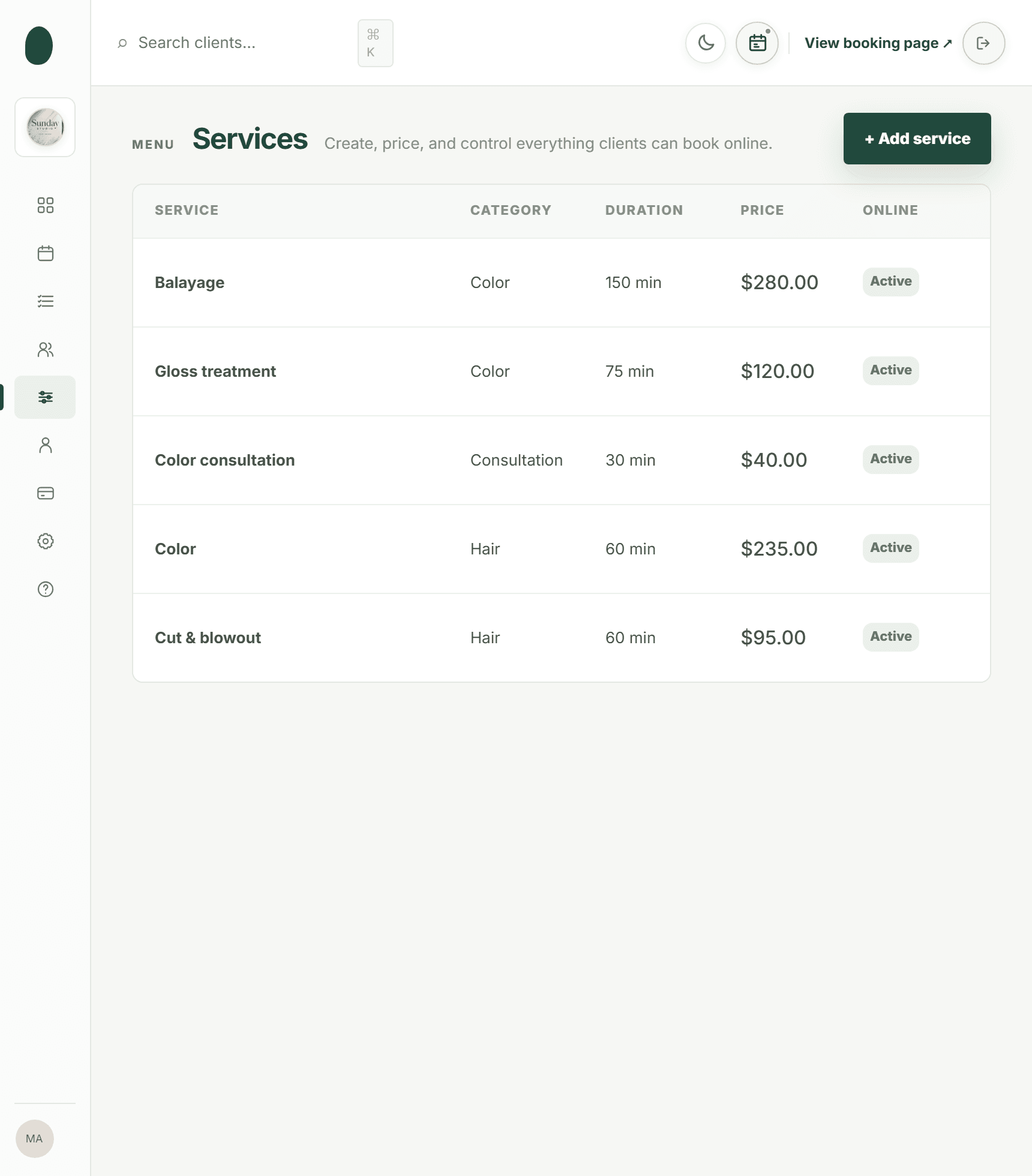
Use service durations that match those decisions. Kevonia’s service menu supports different durations, cleanup or buffer time, prices, optional deposits, and professional assignments, so a salon can create separate regular-fill, extended-fill, foreign-fill, and full-set services instead of forcing every client into one generic booking option.
Handle the cases that create arguments
The policy earns its keep when the appointment does not go to plan. Picture a Saturday where two clients arrive with less than one-third of their extensions remaining, one is 12 minutes late, and the next appointment starts in 20 minutes. If your policy only says “fills every three weeks,” the front desk has no consistent answer.
- Low retention: Assess before starting. If the booked time cannot support the needed work, offer an extended fill or reschedule as a full set. Do not start a service you already know cannot be completed properly.
- Late arrival: State a grace period, whether the appointment will be shortened, and when it must be rescheduled. A late policy should not silently override the fill policy.
- Foreign fill: Require photos or an assessment when possible. Outside work may have different styling, adhesive buildup, grown-out extensions, or damage that changes the service.
- Excessive early fallout: Set a short reporting window for concerns, such as 48 or 72 hours, and explain whether the remedy is an assessment, adjustment, or new appointment.
- Illness, irritation, or eye discomfort: Tell clients to contact the studio before the appointment. Do not frame a safety concern as a normal retention complaint.
- No-show or late cancellation: State the fee, deposit treatment, and how the client can cancel or reschedule. Keep this separate from the decision about which lash service is needed.
A common failure is promising a complimentary correction without defining what qualifies. Poor retention can have several causes, and a broad guarantee can turn every complaint into an unpaid appointment. Limit adjustments to concerns reported within a stated period, require an assessment, and exclude conditions your business cannot reasonably control, such as rubbing, picking, illness, or failure to follow aftercare.
For late arrivals, keep the rule visible next to the appointment instructions rather than burying it in a separate page. Kevonia can set minimum notice, booking windows, time-slot intervals, breaks, staff time off, and salon closures, which helps prevent clients from selecting appointment combinations your team cannot actually support. Its booking reminder email also gives clients a direct way to reschedule or cancel within the salon’s notice window.
Publish the policy where clients make decisions
A policy that exists only in a staff handbook will not prevent booking disputes. Put the short version in the service description, booking confirmation, and appointment reminder. Link to the full policy if you need more detail, but do not make clients hunt for the threshold that changes the price.
- Name the service precisely: regular fill, extended fill, foreign fill, or full set.
- Show the appointment length and price before the client selects a time.
- State the cutoff date or window in plain language.
- State the retention requirement and how the artist assesses it.
- Explain possible service changes before work begins.
- Show cancellation, deposit, and no-show terms before payment.
- Save the client’s booking, policy acceptance, messages, and service outcome.
Use the same wording everywhere. If the booking page says 21 days, the confirmation email should not say three weeks if your staff interprets those differently. If a client must cancel by email, phone, or an online link, state that method and the deadline clearly. The FTC describes clear and conspicuous disclosures as information that consumers can notice and understand before paying, not wording hidden after the purchase. (search.ftc.gov)
Keep an internal decision record for exceptions. Note the last appointment date, estimated retention, service booked, service performed, price change, and client communication. That record gives the next artist context and prevents a returning client from receiving a different answer every time.
Where Kevonia fits for lash studios
Kevonia fits when you want lash fill rules to connect with the rest of the booking process instead of living in a document beside it. It provides a branded online booking page where clients choose a service, professional, date, and time. Inside the workspace, you can manage the service menu, team calendar, client records, availability rules, and Stripe payments.
For this policy, the practical difference is control over service setup. Create separate lash services with their own durations, buffers, prices, deposits, and professional assignments. Double-booking protection checks appointments against hours, breaks, time off, and existing bookings. Client records keep private notes and visit history available when someone books a foreign fill or arrives with a pattern of late cancellations.
Kevonia also supports booking statuses such as awaiting payment, booked, checked in, completed, no-show, and cancelled. Online payments and deposits run through Stripe, and a salon can refund an online payment from the booking itself while showing the Stripe processing fee on the refund. That creates a clearer trail when a client challenges a deposit or cancellation charge. Stripe recommends preserving policy disclosure and service evidence for disputes, so your booking records should match the rules you publish. (docs.stripe.com)
The software will not decide whether a client has enough lashes remaining. Your team still needs a written standard and a professional assessment. Kevonia’s role is to make the appointment type, timing, availability, payment, reminders, and history easier to manage consistently.
Sources
Frequently asked questions
What is a fair lash refill policy?+
A fair policy uses both timing and lash condition. State a regular window, such as two to three weeks, a minimum retention level, and the result when the client falls below that level. Explain possible extended-fill or full-set pricing before work begins.
How many weeks should clients wait between lash fills?+
Many studios schedule regular fills every two to three weeks, but the right window depends on retention, natural lash shedding, the extension style, and the time required by your service. Give clients a specific cutoff and explain what happens after it.
Should a client with less than 40% retention book a full set?+
Not automatically. If your artist has enough time and the remaining extensions are suitable, an extended fill may work. If the appointment would be rushed, uneven, or require extensive removal, a full set is the more honest service. State who makes the assessment and when the price can change.
Should lash studios accept fills from another artist?+
Only if you can inspect the existing work and price the appointment for the extra assessment or removal. Include a foreign-fill rule that explains when a full set may be required. Ask for photos when possible, but do not promise approval from a photo alone.
What should happen if a client books a fill but arrives with almost no extensions?+
Assess the lashes before starting. If the booked duration cannot support the needed work, explain the options: convert to an extended fill, add time if the schedule allows, or reschedule for a full set. Do not wait until checkout to disclose the change.
Where should a lash fill policy appear?+
Place the short version in the service description and booking flow, then repeat the key rules in the confirmation or reminder. Include the cutoff, retention requirement, foreign-fill rule, possible service change, and cancellation or deposit terms before the client pays.
More from the blog

Tattoo Deposit Policy: Set Rules Clients Can Follow
A tattoo deposit policy should protect booked time without creating avoidable disputes. Use this framework to set deposits, explain exceptions, and enforce the rules consistently.

How to Set Staff Availability for a Salon Calendar
A practical guide to setting recurring hours, breaks, time off, service availability, and booking rules so clients see only appointments your salon can actually fulfill.

Salon Payment Dispute Chargeback: What to Do in 2026
A practical 2026 guide for salon and spa owners dealing with disputed card payments, chargebacks, deposits, refunds, evidence, and prevention.