What to Do When a Stylist Calls in Sick: A Salon Owner’s Plan
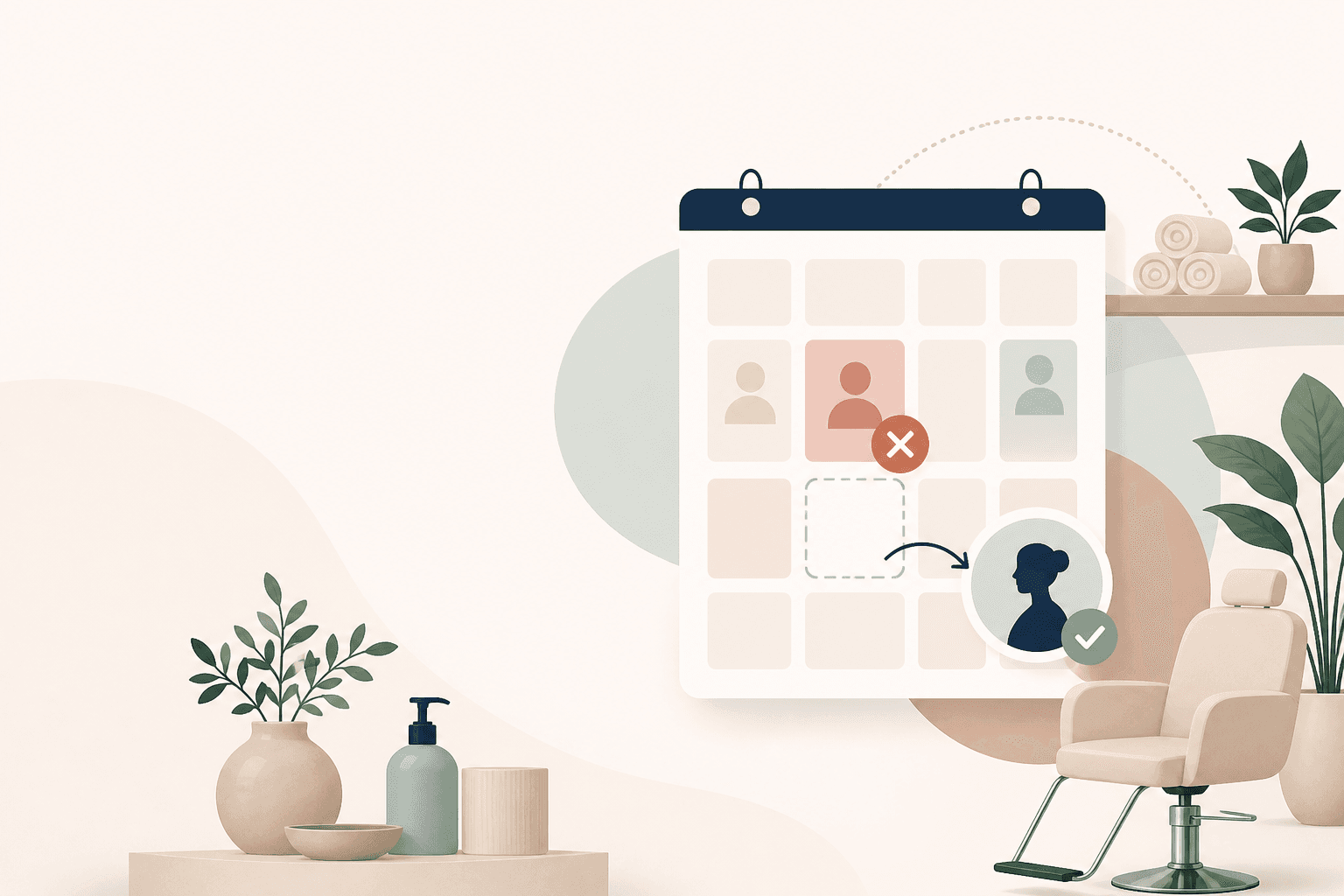
A stylist calling in sick can disrupt a full day of appointments. Use this practical plan to protect clients, reassign services, communicate clearly, and prevent repeat problems.
Key takeaways
- Protect health first: do not pressure a sick stylist to work or ask for unnecessary medical details.
- Review the affected appointments by urgency, service complexity, and available staff before contacting clients.
- Give every client a clear choice: rebook, accept a qualified replacement, or cancel with any applicable refund.
- Use your booking calendar, availability rules, and client records to make the response faster and more consistent.
What to Do When a Stylist Calls in Sick
When a stylist calls in sick, your immediate job is not to save every appointment at any cost. It is to make a calm plan that protects the sick employee, the rest of your team, and the client experience. Start by confirming the absence, securing the day’s schedule, and deciding which appointments can realistically be covered.
The best response to the search question what to do when a stylist calls in sick is a short operating sequence: assess the situation, identify coverage, contact affected clients quickly, update the calendar, and document what happened. The process below is designed for salons, barbershops, spas, med spas, nail studios, and other appointment-based businesses.
1. Confirm the absence without turning it into an interrogation
Respond to the stylist promptly and ask only for the information you need to manage the schedule. Confirm whether they are unable to work today, whether they expect to miss additional shifts, and whether there are any urgent client or workplace details another team member must know. You do not need a diagnosis to decide that someone is unavailable for work. Supporting details are available from EEOC guidance on medical information.
The Equal Employment Opportunity Commission says that medical information obtained from or voluntarily disclosed by an employee must generally be kept confidential. Keep the message professional and avoid sharing the stylist’s condition in a staff group chat or telling clients more than they need to know. “Your appointment needs to be moved because your stylist is unexpectedly unavailable” is usually enough. Supporting details are available from medical information must generally be kept confidential.
- Thank the stylist for letting you know and tell them not to come in if they are too sick to work safely.
- Record the absence through your normal attendance process, without putting unnecessary medical details in the scheduling notes.
- Ask when they expect to provide an update, especially if tomorrow’s schedule is already full.
- Check whether they have a time-sensitive client detail, such as a color formula, consultation note, or special accommodation, that another professional may need.
- Apply the same call-out and documentation policy consistently across the team.
If the stylist reports contagious symptoms, do not ask them to “push through” because the salon is busy. Current CDC guidance says people with respiratory virus symptoms should stay home and away from others until symptoms are improving overall and they have been fever-free for at least 24 hours without fever-reducing medication. After returning to normal activities, added precautions for five days can reduce the chance of spreading illness. Supporting details are available from CDC guidance for returning to normal activities.
2. Freeze the affected schedule before making promises
Before calling clients, stop new bookings from filling the same time slots. Mark the stylist as unavailable for the relevant hours and review the day in one place. If you use a paper book, shared spreadsheet, or several disconnected calendars, appoint one person to own the live schedule so two employees do not promise the same replacement slot.
Review more than the appointment start time. Check the service duration, cleanup or processing time, deposits, client notes, and whether the service requires a particular skill or consultation. A 30-minute bang trim may be easy to reassign; a corrective color, extension move-up, or complex chemical service may not be.
- Identify every appointment assigned to the absent stylist, including appointments later in the week if the absence may continue.
- Separate services that can be covered from services that should be rescheduled with the original stylist or a specialist.
- Check which professionals are actually available, not merely scheduled to be in the building.
- Leave enough time for setup, cleanup, consultation, and late-running appointments.
- Temporarily block unavailable times so online clients cannot create additional disruption.
This is also where a team calendar earns its keep. Kevonia’s week and day calendar lets you filter by professional and use color coding to see the affected workload, while its availability rules account for opening hours, breaks, time off, closures, booking windows, minimum notice, and time-slot intervals. That makes it easier to distinguish a genuine replacement opening from a slot that only looks free.
Do not delete appointments just because they cannot happen as planned. Keep the original booking visible until the client has chosen a new outcome. That preserves the appointment history, prevents accidental double booking, and gives you an accurate record of how many clients were affected. We cover this in more depth in prevent accidental double booking.
3. Decide which appointments to reassign first
You rarely need to contact clients in the order they appear on the calendar. Prioritize the appointments where delay would cause the greatest inconvenience, financial loss, or safety concern. A practical triage system helps your front desk make decisions consistently instead of negotiating from scratch every time.
- Contact clients arriving within the next two to three hours first, because they have the least time to adjust their plans.
- Prioritize clients traveling a long distance, preparing for an event, or coordinating childcare or transportation.
- Review services with deposits, prepaid amounts, consultation work, or time-sensitive maintenance schedules.
- Give special attention to clients whose service cannot be performed by every team member.
- Then work through the remaining appointments in chronological order.
For each appointment, choose the most realistic option before contacting the client. Possible outcomes include a qualified replacement today, a new time with the same stylist, a new time with another stylist later, or cancellation. A client should not hear three different possibilities from three different employees.
Use the client record before you call. Look for the client’s phone number, email address, visit history, private notes, and service details. A replacement professional may need to know the client’s usual formula or preferences, but only share information that is relevant to performing the service and consistent with your privacy practices.
Be careful with skill matching. Do not move a client to a replacement stylist simply because that stylist has an open calendar. Confirm that the professional is trained, authorized, and comfortable performing the service. If the only available substitute can offer a shorter or different service, explain that honestly and let the client decide.
4. Contact clients quickly with a useful message
Call the earliest appointments first, then use the client’s preferred contact method for the rest. If you reach voicemail, leave a concise message and follow up in writing. The goal is to give the client enough information to make a decision without forcing them to call back just to learn what happened.
A strong message includes four things: the appointment is affected, the stylist is unavailable, the salon has a proposed alternative, and the client can choose another option. Avoid saying the stylist is sick unless the stylist has specifically authorized that disclosure. The client needs a solution, not private health information.
“Hi, this is [name] from [salon]. Your appointment today at [time] needs to be adjusted because [stylist] is unexpectedly unavailable. We can offer [replacement professional] at [time], move you to [alternative time], or cancel and review any applicable payment or deposit options. Please reply or call us at [number].”
If you need to cancel appointments stylist sick, do not send a vague one-line cancellation notice. Tell the client what happens next: whether you are holding a replacement slot, whether the deposit remains on file, whether a refund is being issued, and how to choose a new appointment. A clear message prevents repeated calls and reduces the chance that a disappointed client assumes the salon simply forgot them.
For future use, create separate templates for a same-day replacement, a reschedule request, and a full cancellation. Your booking confirmation and reminder messages should already contain the salon’s phone number, appointment time, service, and cancellation terms. Kevonia can send an automatic email reminder the day before, and clients can reschedule or cancel from that email within the salon’s notice window, but a same-day stylist absence still requires a direct salon message.
- Do say: “We have an opening with [professional] at [time]. Would you like us to move your appointment?”
- Do say: “We can reschedule you with your usual stylist when they return.”
- Do say: “We’re sorry for the short notice and appreciate your flexibility.”
- Do not say: “Your stylist has the flu,” “They are having a breakdown,” or any other private explanation.
- Do not imply that the client must accept a replacement professional.
- Do not mark a client as a no-show if the salon canceled or the client was waiting for a response.
5. Handle replacements, rebooking, and payments correctly
When a client accepts a replacement, make the new assignment explicit in the booking record. Confirm the professional, service, start time, price, deposit, and any changes to the appointment length. If the replacement cannot perform the full service, book only what they can safely complete and explain what will happen next.
When a client chooses a new date, do not leave the old appointment active. Update the original booking to the appropriate canceled or rescheduled status according to your salon’s process, then create or move the new appointment so the calendar shows one clear outcome. Keep a short operational note such as “moved due to team absence,” not a detailed account of the stylist’s health.
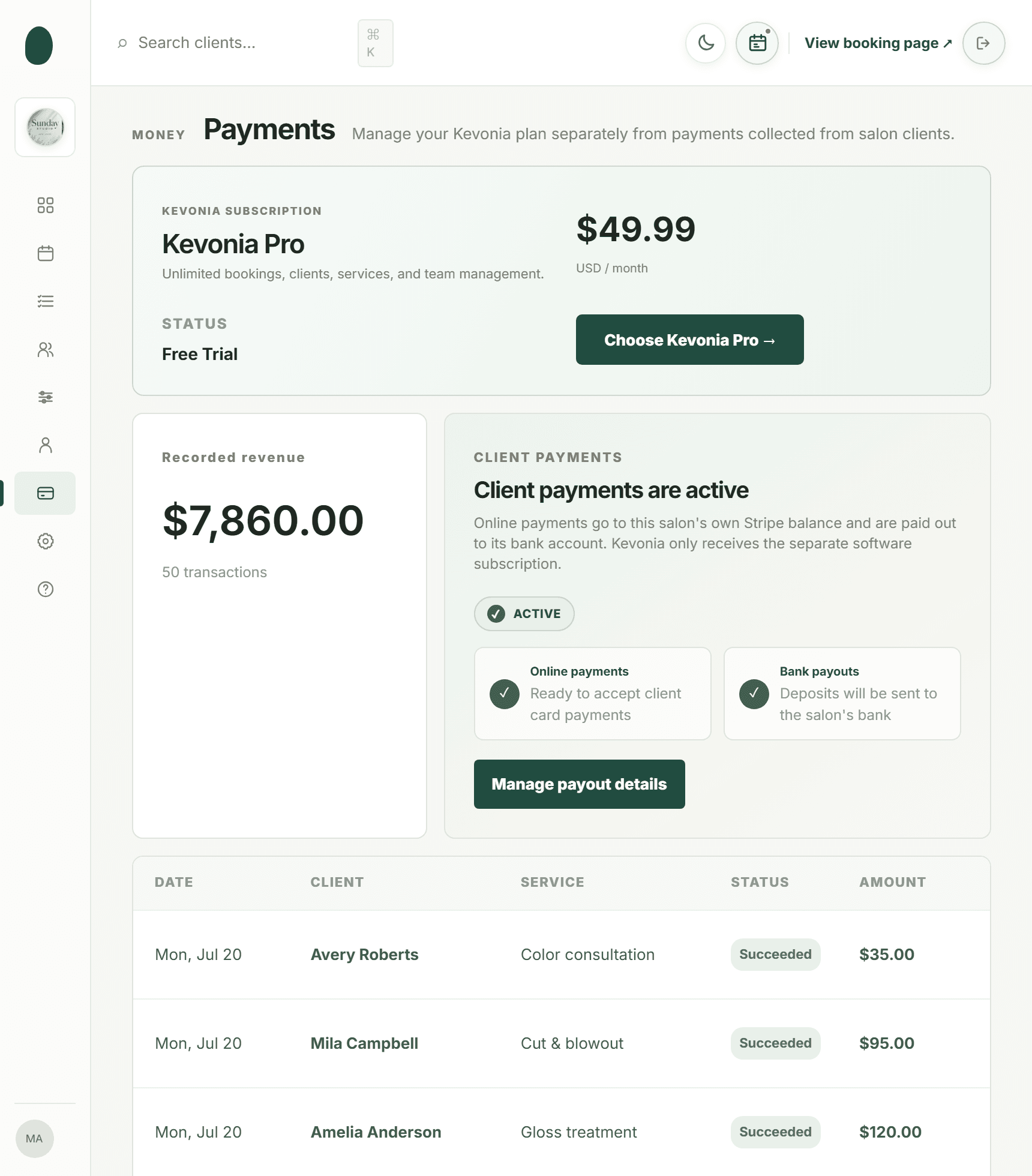
If the client paid online, check the exact payment and deposit status before promising money back. Kevonia connects card payments and deposits through Stripe, and the salon can issue a refund from the booking itself. The booking shows Stripe’s processing fee on a refund so the salon can see the actual cost, and the client is emailed automatically when the refund is made.
- Replacement accepted: confirm the new professional and preserve the original service details.
- Rescheduled: record the new date and time, then remove the obsolete slot from the active schedule.
- Client cancels: apply the written cancellation policy consistently and explain any refund or credit decision.
- Salon cancels: consider a full refund or another goodwill option where appropriate, especially for a same-day disruption.
- No response: document the attempted contact and decide whether to hold, release, or reschedule the appointment based on your policy.
Do not quietly change a client’s price because a different stylist handled the service. If the replacement has a different rate, explain it before confirming. If the salon is offering the replacement at the original price as a service recovery, note that internally so the front desk and professional give the same answer.
6. Protect the rest of the team and the client experience
A sick call can create a second problem when the remaining staff are asked to absorb too much work. Before reassigning anything, check whether the new schedule still allows realistic consultation, service, cleanup, breaks, and closing duties. A fully booked day that runs an hour late may produce more complaints than a carefully rescheduled appointment.
Do not make overtime, skipped breaks, or last-minute role changes the default emergency plan. Ask professionals whether they are willing and qualified to help, but do not pressure them to accept work outside their training. If a client has a medically sensitive service, allergy concern, or other special requirement, confirm the replacement professional can handle it before making the offer.
If the absence involves symptoms that could spread, increase cleaning and ventilation practices appropriate to your workplace and follow applicable state or local health requirements. The CDC recommends additional precautions for five days after someone returns to normal activities from a respiratory illness, including cleaner air, good hygiene, masking, distancing, or testing when appropriate.
Keep the client-facing explanation simple: “We are adjusting today’s schedule to protect our team and provide services safely.” That communicates responsibility without making a public statement about an employee’s health. If several team members become ill or a service area cannot operate safely, closing or reducing appointments may be the correct business decision.
7. Review the legal and policy basics before the next absence
Sick-leave rules vary by location and by the worker’s classification. The U.S. Department of Labor states that federal law does not generally guarantee paid sick leave, but many states and localities have their own requirements. Before disciplining someone, denying leave, changing pay, or requiring documentation, check the law that applies to your salon and whether the person is an employee, independent contractor, or another type of worker. Supporting details are available from Department of Labor paid sick leave guidance.
Your written policy should explain how staff report an absence, who they contact, what notice is expected when an absence is foreseeable, how the salon handles same-day coverage, and when documentation may be requested. The policy should also explain that medical details are private and that employees should not be required to find their own replacement unless that practice is lawful and appropriate for their arrangement.
The EEOC notes that an employer may request a doctor’s note or another explanation for sick leave when it has a policy or practice of requiring that documentation consistently. That does not mean every situation needs a diagnosis or unrestricted medical records. Ask only for information your policy and applicable law permit, and store any medical information separately from ordinary personnel records. Supporting details are available from EEOC rules on doctor’s notes and sick leave.
- Review federal, state, and local sick-leave requirements for your location.
- Confirm whether your policy applies consistently to every comparable worker.
- Separate attendance records from confidential medical information.
- Ask an employment professional before making a difficult discipline or termination decision connected to illness.
- Update the policy after a real absence exposes a gap in the process.
This article is operational guidance, not legal advice. A local employment attorney, payroll professional, or relevant state agency can help you interpret rules that depend on location, business size, worker status, and the facts of the absence.
8. Build a repeatable sick-call system with Kevonia
Kevonia fits this problem because a stylist absence is fundamentally a scheduling and client-record problem. Its branded online booking page lets clients choose a service, professional, date, and time, while the workspace gives the salon a team calendar, client records, service menu, and availability rules. Those tools help you see what changed and make controlled updates instead of relying on memory. For more detail, see Kevonia's hair salon booking software.
For an absence specifically, the useful distinction is that availability is not just an empty box on a calendar. Kevonia checks double-booking protection against hours, breaks, time off, and existing bookings. You can also assign services to specific professionals and use service duration and cleanup or buffer time, which helps prevent a rushed replacement plan from creating a later collision.
The client record gives the front desk a practical handoff point: search by name, email, or phone, review visit history and private notes, and then update the booking status. The salon can set statuses such as needs confirmation, awaiting payment, booked, checked in, completed, no-show, or canceled. That creates a cleaner record of what happened when the original appointment could not go ahead.
Kevonia is also useful when the disruption involves money. Online payments and deposits run through Stripe, payouts go to the salon’s bank account, and refunds can be made from the booking. The system is priced as one plan at US$49.99 per month with unlimited team members, bookings, clients, and services, with no per-booking commission. It includes a free 14-day trial with no credit card required to start; cancel before the trial ends and you are never charged. For more detail, see Kevonia's Kevonia’s one-plan booking workspace.
Set up a simple emergency workflow inside your normal operations: block the absent professional’s availability, filter the calendar, review each affected client record, contact clients using a prepared message, update the booking status, and process any refund from the booking when appropriate. The software does not replace judgment about health, staffing, service quality, or employment law. It gives you one organized place to carry out those decisions.
After the day is over, fix the process—not just the schedule
Hold a short review while the details are fresh. Measure how many appointments were affected, how quickly clients were contacted, how many accepted a replacement, how many rescheduled, and whether any refund or pricing confusion occurred. The purpose is not to blame the person who got sick; it is to find the weak point in your operating system.
- Create a current list of professionals who can cover each major service category.
- Keep backup contact information for the owner, manager, and front-desk lead.
- Write three or four client message templates before an emergency happens.
- Define who may move appointments, change prices, issue refunds, and close online availability.
- Review whether your service durations and buffer times reflect reality.
- Schedule periodic checks of staff time off and availability rules.
- Track repeated disruptions so you can decide whether to hire, cross-train, or change opening capacity.
A one-day absence should not become a permanent burden on the owner. If the same type of disruption keeps causing chaos, the solution may be better cross-training, a larger relief roster, more accurate service timing, or a clearer policy—not simply asking the team to work harder. A repeatable response protects revenue while preserving trust with clients and staff.
Sources
- Centers for Disease Control and Prevention: Preventing Spread of Respiratory Viruses When You’re Sick
- U.S. Equal Employment Opportunity Commission: Disability Discrimination and Employment Decisions
- U.S. Equal Employment Opportunity Commission: Questions and Answers on Disability-Related Inquiries and Medical Examinations
- U.S. Department of Labor: Paid Leave
- Kevonia
- Kevonia hair salon booking software
- Kevonia salon booking program
- Kevonia salon reservation software
- Kevonia spa booking software
- Kevonia blog: How to Prevent Double Bookings in a Salon or Spa
- Kevonia blog: How to Write a Salon Booking Confirmation Email in 2026
Frequently asked questions
Should I ask a stylist exactly what illness they have?+
Usually, no. Ask whether they are able to work, whether they expect to miss more time, and whether there are work-related details another professional needs. Avoid requesting unnecessary diagnoses or sharing medical information with coworkers or clients. If your policy requires documentation, apply it consistently and limit the request to what your policy and applicable law allow.
What should I tell a client when their stylist calls in sick?+
Tell the client that the stylist is unexpectedly unavailable and give a concrete choice: a qualified replacement, another date, or cancellation. Do not disclose the stylist’s diagnosis unless the stylist has authorized it. Include the appointment time, service, replacement details if available, and what will happen to any deposit or online payment.
Can another stylist take over the appointment?+
Yes, if the replacement is qualified, available, and comfortable performing the service. Check the service complexity, consultation requirements, timing, price, and client preferences first. Explain any material change before confirming the appointment, and never imply that the client must accept the replacement.
What should I do with the client’s deposit if the salon cancels?+
Review your written policy and the payment status before promising an outcome. For a same-day salon cancellation, many owners choose a full refund, a credit, or another goodwill option, but the correct approach depends on your policy and local requirements. If the payment was processed through Kevonia, the salon can refund an online payment from the booking itself, see the Stripe processing fee associated with the refund, and trigger an automatic client email.
How do I stop online bookings from filling the absent stylist’s schedule?+
Block the professional’s unavailable hours immediately, then confirm that breaks, time off, service assignments, minimum notice, and booking windows are correct. Do not rely only on deleting individual appointments. A calendar with availability rules and double-booking protection makes it easier to close the correct time slots without accidentally blocking the whole salon.
What if a stylist keeps calling in sick at the last minute?+
Handle each absence consistently under your written attendance and leave policy, while keeping medical information confidential. Document dates, notice, operational impact, and the policy steps taken—not gossip or unsupported assumptions about the person’s health. Before discipline or termination, check applicable sick-leave, disability-accommodation, wage, and worker-classification rules with a qualified employment professional.
More from the blog

When to Hire Your First Stylist: A Salon Owner’s Guide
Hiring your first stylist is a capacity and cash-flow decision, not just a sign of growth. Use this practical checklist to know when demand, finances, and systems are ready.

Junior vs Senior Stylist Pricing: A 2026 Guide for Salon Owners
A practical guide to setting junior and senior stylist prices, choosing the right price gap, explaining the difference to clients, and reviewing tiers as your team grows.
What to Do When a Stylist Leaves Your Salon in 2026
A stylist’s departure can disrupt appointments, client relationships, and revenue. Use this practical 2026 checklist to protect the salon and give clients a smooth transition.