What to Do When a Stylist Leaves Your Salon in 2026
A stylist’s departure can disrupt appointments, client relationships, and revenue. Use this practical 2026 checklist to protect the salon and give clients a smooth transition.
Key takeaways
- Secure access and records before the departure creates operational problems.
- Contact affected clients quickly with specific appointment options, not vague apologies.
- Reassign services based on timing, skill, and client preference rather than filling every opening.
- Review pay, contracts, privacy, and client-solicitation issues with the right state-specific professionals.
- Use a shared calendar and complete client records so the relationship stays with the salon, not one person’s phone.
What to Do When a Stylist Leaves Your Salon: Start With the Next 72 Hours
When a stylist resigns, the immediate question is usually not how to replace them. It is how to keep tomorrow’s appointments, answer anxious clients, protect salon information, and prevent the rest of the team from being overwhelmed. A calm, organized response matters more than a dramatic announcement.
The best first move is to separate the situation into three tracks: secure access and business records, stabilize the appointment book, and communicate with clients. Handle those in that order unless there is an immediate safety or legal concern. Do not promise that every client will receive the same stylist, price, timing, or treatment until you have checked the schedule and staff capacity.
1. Confirm the Departure and Secure the Business
Document the basics privately: the stylist’s last working day, whether they are leaving voluntarily or being terminated, which appointments are affected, whether they have keys or equipment, and who will speak with clients. Keep the conversation factual. Avoid criticizing the stylist in front of clients or encouraging staff to speculate about why the person left.
Before the stylist’s access ends, export or review the information the salon is entitled to retain under its agreements and applicable law. Make sure future appointments, deposits, notes, formulas, consent records, and contact details are stored in the salon’s system rather than only on a personal phone or paper notebook. Then remove access to booking, payment, email, social, alarm, and other business accounts at the appropriate time. Supporting details are available from protecting personal information.
- Change shared passwords and end individual logins when access is no longer needed.
- Collect keys, access cards, salon-owned devices, client forms, and business documents.
- Check whether the stylist has downloaded or copied client information, and preserve relevant records if you suspect misuse.
- Confirm who can issue refunds, change appointments, access payment details, or alter staff availability.
- Record the handoff date and the person responsible for each unfinished task.
The Federal Trade Commission recommends having a procedure for workers who leave so their access to sensitive information is ended and business materials are recovered. Treat client names, contact details, payment-related information, private notes, and service history as information that deserves controlled access, even when the salon is small. Supporting details are available from FTC guidance for businesses.
2. Freeze the Appointment Problem Before It Spreads
Run a report or manually review every booking assigned to the departing stylist. Start with appointments scheduled before the final working day, then check future bookings, recurring appointments, color services that need a formula history, prepaid appointments, packages, deposits, consultations, and guests who have already received a reminder. Do not assume the online calendar has captured every promise made by text or at the front desk.
- Create a master list of affected appointments with the date, service, duration, deposit status, client contact information, and any important private note.
- Mark each booking as safe to keep, needs a new professional, needs a new time, or requires a direct owner review.
- Identify the appointments that are hardest to replace: corrective color, extensions, chemical services, bridal work, long appointments, and guests with strict timing needs.
- Hold realistic blocks on other professionals’ calendars while you contact clients, but do not overload staff before they agree to the change.
- Review the list at the end of each day until all affected appointments have a confirmed plan.
For each booking, decide whether the client needs the same service, a shorter or longer appointment, a consultation first, or a specialist. A haircut may transfer easily; a color correction may not. If no one can safely perform the service, offer a later date or a refund rather than placing the client with someone who is not equipped for the work.
A shared system reduces the chance that one person’s departure turns into duplicate appointments or missing information. Kevonia’s team calendar supports week and day views, per-professional filters, and color coding, while its double-booking protection checks hours, breaks, time off, and existing bookings. Its salon booking software can be useful when the owner needs one current schedule instead of separate notebooks, texts, and personal calendars.
3. Contact Clients With a Specific Transition Plan
Clients usually want to know four things: Is my appointment still happening? Who will perform it? Will the price or timing change? What should I do if I do not want the replacement? Answer those questions directly. Contact the people with appointments first, then the clients who regularly book with the stylist, then the wider client base if a broader announcement is appropriate.
For an appointment already on the books, call when the service is complex or the appointment is soon. Email can work for routine services with plenty of notice. A useful message is: “We are contacting you because Alex is no longer available for your appointment on Tuesday, September 8. We can move you to Jordan at the same time, offer Casey on Thursday, or refund your deposit if neither option works. Which would you prefer?” Give two or three real choices, not a message asking the client to call without any context.
- Explain the change without sharing private employment details.
- Name the replacement professional only after confirming that person’s availability and suitability.
- Keep the original service, price, deposit, and duration unless you clearly explain a change.
- Offer the client a choice of another team member, another date, or cancellation where practical.
- Log the client’s preference and the result so another staff member does not repeat the same conversation.
If a client asks whether they can follow the stylist, do not argue. State the salon’s policy, explain what records and deposits remain with the salon, and let the client decide. If a client wants to stay, make the next booking easy. If they leave, remain professional; a respectful interaction can preserve the possibility of a future return.
When handling stylist leaving salon clients, do not send a mass message that makes the situation sound chaotic. Segment the communication by appointment status and client relationship. A guest arriving tomorrow needs a personal solution; a guest who has not booked in a year may only need a neutral update if the stylist’s public profile or salon page changes.
4. Reassign Appointments Without Creating a Second Crisis
Reassigning appointments is a service-quality decision, not just a calendar exercise. Match the replacement to the client’s service, hair history, timing, and comfort level. Ask the departing stylist, if appropriate and permitted, for concise handoff information such as formula details, service expectations, or an unfinished consultation. Do not ask them to transfer private data through an unapproved personal channel.
A practical priority order is: keep the appointment time when the replacement is qualified, keep the service with a qualified professional even if the time changes, offer a consultation before a technical service, and refund or reschedule when neither is safe. For a first-time client, a short pre-appointment call can prevent a mismatch. For a long-term color client, make sure the receiving stylist can see relevant history before the appointment begins.
- Routine cuts and basic services: reassign based on availability and the client’s stated preference.
- Technical services: verify training, timing, consultation needs, and access to prior formulas or notes.
- High-value or event bookings: involve the owner or manager and confirm the plan in writing.
- Appointments with deposits: confirm whether the deposit moves with the booking or is refunded under the salon’s policy.
- Clients who decline a replacement: offer a future date, a trusted referral, or a prompt refund according to the circumstances.
If staff capacity is tight, do not quietly add clients to every available gap. That can create late starts, rushed consultations, overtime, and more cancellations. Review the receiving professional’s opening hours, breaks, time off, cleanup time, and existing workload before moving anything. The goal is a stable guest experience, not a fully packed calendar for one week.
If you are reassigning salon appointments after staff leaving, track the outcome for each guest: accepted replacement, rescheduled, refunded, unreachable, or declined. That simple status list tells you where revenue is at risk and which clients need a second contact. For more detail, see Kevonia's salon reservation software.
5. Protect Client Relationships and Salon Data
A stylist may have genuine personal relationships with clients, but the salon still needs a clear process for business records. Keep client history, formulas, notes, consent information, deposits, and cancellation records in the salon-controlled workspace. Limit access to what each person needs for their role, and avoid copying an entire client list into a spreadsheet just because someone is leaving.
The FTC’s small-business data guidance emphasizes limiting access, having a retention policy, and removing access when workers leave. Apply those principles to salon operations: decide which records must be kept, who can view private notes, how long records are retained, and how paper forms are securely destroyed. If you discover unauthorized copying, client outreach using confidential information, or a lost device, preserve evidence and get legal advice promptly.
Do not automatically rely on a noncompete or nonsolicitation clause. Enforceability varies by state and by the worker’s classification, contract, and circumstances. A customer list may receive legal protection only under particular facts, and a contract may not say what an owner assumes it says. Have an employment attorney review the agreement and the conduct before threatening a former stylist or contacting their new workplace. Supporting details are available from customer information and confidentiality.
- Do not delete client records to punish a departing worker.
- Do not change a client’s private note to make the former stylist look bad.
- Do not promise a client that the stylist is legally prohibited from serving them elsewhere.
- Do not give a former worker continued access simply to make the transition easier.
- Do not mix employment disputes into client-facing messages.
6. Handle Pay, Deposits, Refunds, and Contract Details Carefully
Before the final day, reconcile wages, commissions, tips, vacation or paid-time-off obligations if applicable, product charges, booth-rent amounts, outstanding client balances, and any promised bonuses. The U.S. Department of Labor states that federal law does not generally require an immediate final paycheck, but some states do. Follow the stricter applicable rule and check your state labor department, written agreement, and payroll provider before making deductions or delaying payment. Supporting details are available from Department of Labor final-paycheck guidance.
Appointments create a separate accounting problem. Decide what happens to deposits when the original stylist is unavailable. If the salon can provide the same service with another qualified professional, document that the booking moved. If the client declines the replacement or the salon cannot provide the service, process the refund under the salon’s policy and record why. Do not make a deposit disappear by deleting the booking.
Kevonia connects card payments and deposits through Stripe, and the salon can refund an online payment from the booking itself. The refund screen shows Stripe’s processing fee on the refund so the salon can see the actual cost, and the client is emailed automatically. That makes the transaction easier to audit during a departure, but the owner should still apply the salon’s written cancellation and deposit policy consistently. Supporting details are available from Stripe refund documentation.
For the employment side, review whether the person was an employee, independent contractor, booth renter, or another arrangement. The answer can affect pay, taxes, notice expectations, access, and client communications. If the situation involves disputed commissions, alleged discrimination, retaliation, wage deductions, harassment, or a contract restriction, stop improvising and get professional advice.
7. Rebuild Capacity Without Rushing the Hire
Replacing a stylist is not only a recruiting task. First calculate the work that actually needs coverage. Review the departing stylist’s appointments by service, day, duration, revenue, rebooking rate, and technical requirements. Some demand may transfer to current staff, some clients may prefer a different schedule, and some services may not justify a full-time hire. Use the data to decide whether you need an employee, contractor, booth renter, part-time specialist, or a temporary schedule adjustment.
- Protect the busiest appointment windows before adding low-demand hours.
- Identify services that only one person currently performs and create a training or recruiting plan for them.
- Leave buffer for consultations, cleanup, corrections, and late arrivals.
- Ask existing staff privately about capacity and preferred service types before changing schedules.
- Set a review date after 30 days to compare filled hours, cancellations, rebooking, and client feedback.
Do not offer an immediate promotion or a major pay change in the middle of the disruption without checking the economics. A temporary retention bonus, expanded schedule, or service-training plan may work better than a permanent commitment made under pressure. Explain changes clearly and put compensation terms in writing.
If you are unsure how many appointments the remaining team can absorb, estimate capacity using service duration, cleanup time, breaks, opening hours, and realistic utilization rather than counting every empty calendar slot. The blog’s guidance on how many clients a stylist can see in a day can help you pressure-test the schedule before promising more availability.
8. Use the Departure to Make the Salon Less Fragile
A stylist leaving exposes whether the salon owns its client experience or merely hosts individual books of business. Build systems that make a client’s history, next appointment, payment status, and communication visible to the authorized team. A client should be able to book with the salon even when one professional is on vacation, sick, or no longer working there.
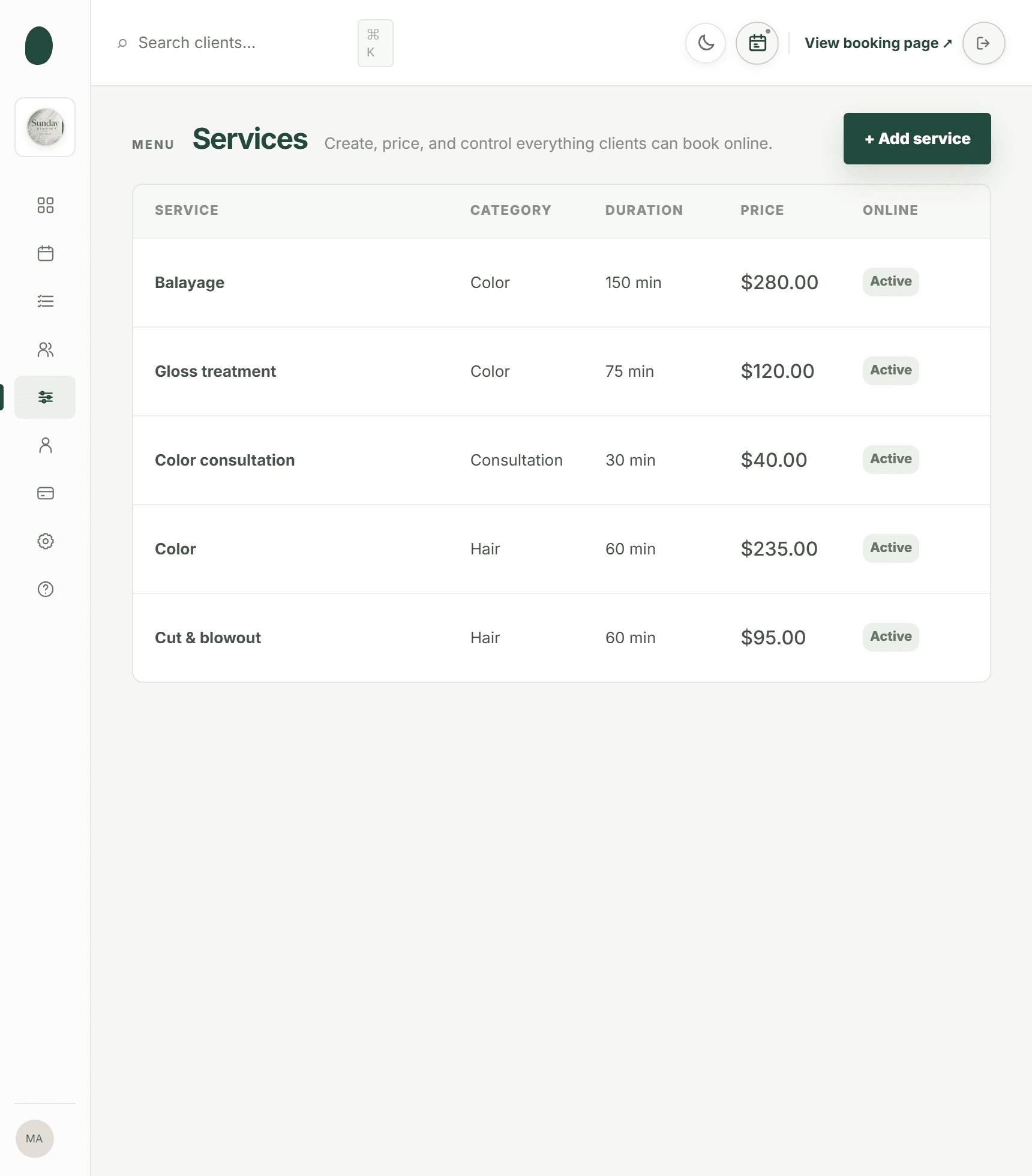
Kevonia gives a salon a branded online booking page where clients choose a service, professional, date, and time. The workspace includes a team calendar, client records searchable by name, email, or phone, a service menu, and availability rules for opening hours, breaks, time off, closures, booking windows, minimum notice, and time-slot intervals. Automatic email reminders go out the day before, and clients can reschedule or cancel from the reminder within the salon’s notice window.
That setup does not replace judgment. The owner still needs to choose which professional performs a technical service, decide how to handle a deposit, and speak personally with important clients. Its value is continuity: the salon can update one booking record, keep the client history available to the receiving professional, and prevent the former stylist’s departure from creating hidden bookings across disconnected tools.
Kevonia has one plan at US$49.99 per month with unlimited team members, bookings, clients, and services, with no per-booking commission. It offers a free 14-day trial with no credit card required to start; cancel before the trial ends and you are never charged. For an owner reviewing systems after a departure, those terms make it possible to test the workflow with the team before committing, rather than buying separate access for each professional.
Finally, write the process down while the details are fresh. Your departure checklist should cover access removal, appointment review, client contact, deposits, records, final pay, equipment, public announcements, replacement hiring, and a 30-day review. The next resignation will still be difficult, but it should not require starting from zero.
Common Mistakes to Avoid
- Waiting until the former stylist’s first missed appointment before contacting clients.
- Sending clients a vague announcement with no replacement times or service options.
- Filling every open chair without checking skill, timing, breaks, and service complexity.
- Letting client records remain on personal phones, paper notebooks, or unmonitored spreadsheets.
- Withholding earned pay or making deductions without checking state law and the written agreement.
- Threatening legal action before an attorney reviews the contract and facts.
- Deleting canceled or refunded bookings instead of preserving an accounting trail.
- Treating the departure as proof that the entire team is disloyal.
The most damaging response is usually an improvised one: a rushed mass text, an overloaded calendar, an angry social post, or a disputed deduction. Slow down enough to make a documented plan, then move quickly on the appointments that affect clients in the next few days.
FAQ: Stylist Departures and Salon Operations
These questions come up most often when an owner is trying to protect the schedule without damaging trust.
What should I tell clients when a stylist leaves?
Tell affected clients that the stylist is no longer available, confirm whether their appointment can remain at the same time, and offer specific replacement options. Do not disclose private employment details or make negative claims. If the client does not want a replacement, explain the rescheduling and refund choices under your salon policy.
Can a stylist take salon clients when they leave?
There is no single nationwide answer. The result can depend on state law, the person’s classification, the employment agreement, how the client information was obtained and protected, and whether the former stylist actively solicited clients. Do not assume a restriction is enforceable or unenforceable; have a qualified attorney review the specific contract and conduct.
Should I reassign every appointment to another stylist?
No. Reassign routine services when the replacement is qualified and the client agrees, but use extra care with corrective color, extensions, chemical services, bridal work, and long technical appointments. If no qualified professional is available, offer a later date, a consultation, a referral, or a refund rather than risking a poor result.
How do I handle deposits for appointments affected by a departure?
Apply the written deposit policy consistently. If another qualified professional can perform the service and the client accepts the change, move the booking and preserve the deposit record. If the salon cannot provide the service or the client declines the offered replacement, refund according to the policy and document the reason and transaction.
What should I do if the stylist has client information on a personal phone?
Do not attempt to access personal accounts unlawfully or retaliate. Preserve your salon’s records, review the signed agreement and policies, ask for return or deletion through an appropriate written process, and seek legal advice if confidential information was copied, retained, or used. Going forward, keep client records in a salon-controlled system with role-appropriate access.
How can I stop salon staff turnover from disrupting bookings?
Use one team calendar, keep complete client records, define service ownership at the salon level, require consistent appointment and deposit procedures, and maintain a written departure checklist. Review capacity and rebooking data regularly so you know which services and time blocks need backup before a resignation occurs.
Sources
- Federal Trade Commission: Protecting Personal Information: A Guide for Business
- Federal Trade Commission: Compendium of Recent Policy Statements, Advisory Opinions and Final Rules
- U.S. Department of Labor: Last Paycheck
- Stripe Documentation: Refund and cancel payments
- Kevonia: Salon and spa management software
- Kevonia: Hair salon booking software
- Kevonia: Salon reservation software
- Kevonia: Spa booking software
- Kevonia blog: How to Prevent Double Bookings in a Salon or Spa
- Kevonia blog: How Many Clients Can a Stylist See in a Day?
Frequently asked questions
What should I tell clients when a stylist leaves?+
Tell affected clients that the stylist is no longer available, confirm whether their appointment can remain at the same time, and offer specific replacement options. Do not disclose private employment details or make negative claims. If the client does not want a replacement, explain the rescheduling and refund choices under your salon policy.
Can a stylist take salon clients when they leave?+
There is no single nationwide answer. The result can depend on state law, the person’s classification, the employment agreement, how the client information was obtained and protected, and whether the former stylist actively solicited clients. Have a qualified attorney review the specific contract and conduct.
Should I reassign every appointment to another stylist?+
No. Reassign routine services when the replacement is qualified and the client agrees, but use extra care with corrective color, extensions, chemical services, bridal work, and long technical appointments. If no qualified professional is available, offer a later date, a consultation, a referral, or a refund.
How do I handle deposits for appointments affected by a departure?+
Apply the written deposit policy consistently. If another qualified professional can perform the service and the client accepts the change, move the booking and preserve the deposit record. If the salon cannot provide the service or the client declines the offered replacement, refund according to the policy and document the reason.
What should I do if the stylist has client information on a personal phone?+
Do not attempt to access personal accounts unlawfully or retaliate. Preserve your salon’s records, review the agreement and policies, ask for return or deletion through an appropriate written process, and seek legal advice if confidential information was copied, retained, or used.
How can I stop salon staff turnover from disrupting bookings?+
Use one team calendar, keep complete client records, define service ownership at the salon level, require consistent appointment and deposit procedures, and maintain a written departure checklist. Review capacity and rebooking data regularly so you know which services and time blocks need backup before a resignation occurs.
More from the blog

What to Do When a Stylist Calls in Sick: A Salon Owner’s Plan
A stylist calling in sick can disrupt a full day of appointments. Use this practical plan to protect clients, reassign services, communicate clearly, and prevent repeat problems.

When to Hire Your First Stylist: A Salon Owner’s Guide
Hiring your first stylist is a capacity and cash-flow decision, not just a sign of growth. Use this practical checklist to know when demand, finances, and systems are ready.

Junior vs Senior Stylist Pricing: A 2026 Guide for Salon Owners
A practical guide to setting junior and senior stylist prices, choosing the right price gap, explaining the difference to clients, and reviewing tiers as your team grows.