How to Write Salon Service Descriptions That Get Booked
A practical guide to writing salon service descriptions that make clients feel confident, choose the right appointment, and book without calling your front desk.

Key takeaways
- Lead with the client’s result, then explain what the appointment includes.
- Always clarify duration, starting price, who the service is for, and what the client should know before booking.
- Use specific, plain language instead of vague luxury claims or stylist-only terminology.
- Keep descriptions consistent across your website, booking page, and Google Business Profile.
- Review descriptions whenever your timing, pricing, products, or booking rules change.
Start with the question your client is trying to answer
If you searched for how to write salon service descriptions, you probably do not need another list of glamorous adjectives. You need wording that helps a client decide: Is this the service I need, what will happen during it, how long will it take, and what will I pay?
A useful service description removes uncertainty before the appointment. It should help a first-time guest choose confidently, help an existing client rebook the correct service, and give your team fewer basic questions to answer by phone or direct message. Write for the person who knows the result they want but may not know your professional terminology.
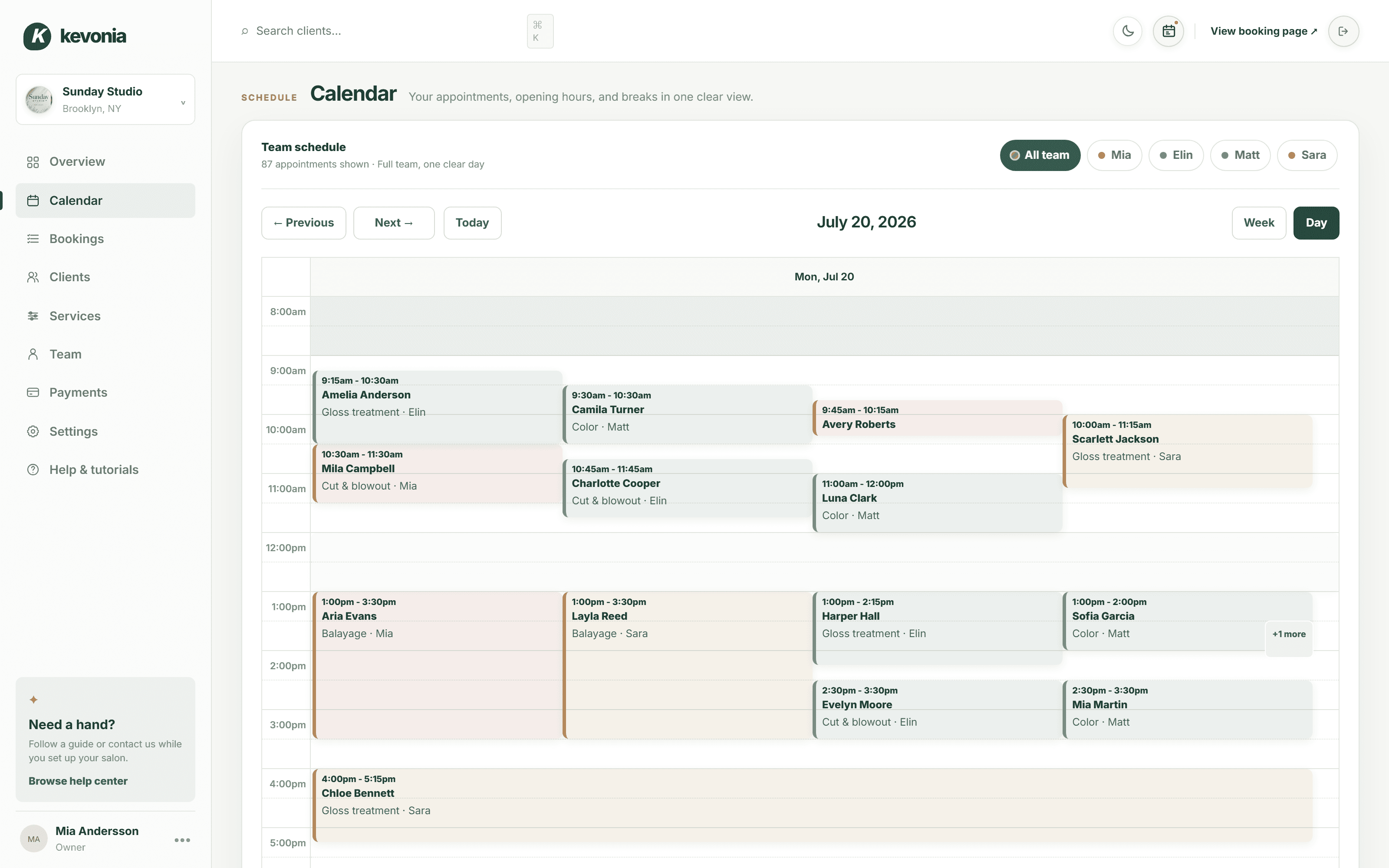
Build every description around five decisions
Before writing, list the information a client needs to make a booking. The description does not need to explain every technique or product, but it should set an accurate expectation. Google allows eligible service businesses to add service names, descriptions, and prices to their Business Profile, so the same clear structure can support both your website and local search presence. (support.google.com)
- The result: What will the client leave with or feel?
- The scope: What is included, and what is not included?
- The timing: How long is the appointment, including realistic processing or cleanup time?
- The price: Is the amount fixed, starting at, or dependent on length, hair density, product use, or consultation?
- The fit: Who should book this service, and when should they choose something else?
A simple formula is: “A [service] for [client or goal] that includes [main steps or outcome]. Allow [duration]. [Price or pricing note]. [Important preparation, limitation, or upgrade note].” Use the formula as a checklist, not as a sentence you must repeat word for word.
For example: “A chin-length haircut for clients who want a fresh shape or light trim. Includes consultation, shampoo, cut, blow-dry, and basic styling. Allow 60 minutes. For major changes or thick, waist-length hair, book a transformation consultation instead.” This tells the client much more than “Enjoy a luxurious haircut tailored just for you.”
Lead with the outcome, not the technique
Most clients shop by desired outcome. They want softer highlights, a cleaner beard shape, longer-lasting gel polish, relief from muscle tension, or a skin treatment for a specific concern. Put that goal near the beginning, then explain the professional work that creates it.
This does not mean hiding your expertise. Translate it. Instead of opening with “multi-dimensional foil placement and bond-building treatment,” write “Brighten your current color with blended highlights and a bond-supporting treatment.” The second version keeps the technical value but gives the client a reason to care.
- Weak: “Signature facial using advanced modalities.”
- Stronger: “A customized facial for congested, dry, or tired-looking skin, with cleansing, exfoliation, extractions when appropriate, mask, moisturizer, and SPF.”
- Weak: “Luxury manicure experience.”
- Stronger: “A classic manicure with nail shaping, cuticle care, polish, and hand massage for a clean, polished finish.”
Be careful with outcome claims in services related to skin, wellness, or medical aesthetics. Describe the experience and intended appearance without promising to diagnose, cure, permanently change, or guarantee a result. If a service requires a consultation or has contraindications, say so plainly rather than burying the detail in a policy page.
Use salon service menu wording clients can scan
Your service menu is not a brochure. It is a decision screen. A client may be comparing several services on a phone while commuting, between meetings, or after seeing a photo on social media. Short paragraphs, familiar names, and visible details make the right choice easier.
- Name the service in the words clients actually use. Keep your internal nickname in a secondary note if necessary.
- Put the main result in the first sentence.
- Use one short paragraph or two to four concise sentences.
- Use concrete nouns and verbs: cleanse, shape, remove, tone, polish, massage, style, repair, hydrate.
- Explain unusual terms the first time they appear.
- Avoid stacking adjectives such as luxurious, indulgent, bespoke, elevated, and transformative unless they add real information.
Group related services in a logical order: haircuts, color, styling, treatments, extensions; or nails, enhancements, removals, and add-ons. Google’s guidance treats a service-business menu as a complete list of available services, not merely a selection of favorites, so do not use your public menu to advertise only the easiest or most profitable appointments. (support.google.com)
If your salon serves different audiences, you can clarify that in the name or first line: “First-Time Color Consultation,” “Men’s Clipper Cut,” “Teen Gel Manicure,” or “Bridal Trial Hair Styling.” Specific labels prevent clients from choosing a generic service and hoping the professional will infer what they need.
Include timing, price, and booking boundaries
A description that sounds attractive but omits practical constraints creates disappointment. State the appointment length your calendar is actually prepared to hold. If a service has different durations, create separate options when that makes the client’s choice clearer, such as “Short Hair Blowout” and “Long or Thick Hair Blowout.”
Be equally precise about price. Use a fixed price when the service is standardized. Use “starting at” only when the reason for variation is understandable, such as hair length, density, extension amount, or additional product. If a consultation determines the final quote, say that before the client books. For broader pricing decisions, see this practical guide to price salon services.
- Duration: “Allow 90 minutes.”
- Price: “$85” or “Starting at $150; final price depends on length and density.”
- Preparation: “Arrive with clean, dry hair unless otherwise advised.”
- Eligibility: “For existing extension clients only.”
- Consultation: “Book a consultation first if you are changing from dark permanent color to blonde.”
- Add-ons: “A toner or extra product may be recommended and charged separately.”
Do not use the description to hide important rules. If the client must bring reference photos, complete a patch test, remove old product, or leave extra time for a consultation, put that information where the booking decision happens. A clear boundary may reduce some bookings, but it also reduces unsuitable appointments and corrective conversations later.
Write descriptions for online booking, not just browsing
To describe salon services online booking clients need more than persuasive copy. They need a dependable handoff from the description to the appointment slot. The selected service must match the time your professional needs, the cleanup or buffer time required, and any preparation that affects the schedule.
For example, a “full set” may mean different things at different studios. State whether it includes extensions, shaping, gel color, removal, nail art, or a basic finish. For hair, clarify whether a blow-dry is included after color. For massage or spa services, distinguish hands-on time from check-in, consultation, and changing time if that affects what the client should expect.
Use one description for one booking decision. If clients regularly ask which of three services to choose, add a short comparison note or create a consultation option. Do not force a complicated service into a vague “Other” appointment. That makes the calendar look tidy while transferring the work to your front desk and service provider.
A booking system should store the operational details separately from the marketing description. In Kevonia, a service can have its duration, cleanup or buffer time, price, optional deposit, and professional assignments configured in the service menu. That lets the client-facing wording explain the appointment while the calendar uses the timing rules needed to prevent unrealistic slots.
For online payment or deposits, repeat the service name and the key scope clearly. Stripe’s documentation describes product names and descriptions as customer-facing information, which is a useful reminder that payment records should not contain an internal abbreviation a client would not recognize. (docs.stripe.com)
Create examples for common salon services
Use these examples as models for structure and specificity. Replace the details with your actual process, timing, products, and pricing. The point is not to copy the wording; it is to show how a useful description answers the client’s next question.
- Haircut: “A tailored haircut for short to medium hair, including consultation, shampoo, cut, blow-dry, and basic styling. Allow 60 minutes. Book a transformation consultation for a major length or shape change.”
- Balayage: “Hand-painted lightening for a soft, blended result with a natural grow-out. Includes consultation, lightening, toner, treatment, and blow-dry. Allow 3 hours. A consultation is recommended if you have permanent dark color or previous color correction.”
- Gel manicure: “A durable gel manicure with nail shaping, cuticle care, gel color, and a finished top coat. Allow 60 minutes. Existing gel removal is included only when applied at this salon; outside removal requires the removal add-on.”
- Brow shaping: “A customized brow wax or tweeze to clean the shape while keeping your natural fullness. Allow 20 minutes. Tell your provider about retinoid use or recent exfoliating treatments before the appointment.”
- Deep tissue massage: “Focused massage for clients who want firm pressure on areas of muscular tension. Allow 60 minutes, including a brief intake. Tell your therapist about injuries, pregnancy, or medical concerns before booking.”
Notice that each example names the service, explains the result, states what is included, gives a realistic duration, and flags a condition that could change the appointment. That is the standard to aim for across your menu.
Keep descriptions accurate across every channel
A service description becomes a problem when your website says one thing, your booking page says another, and your front desk has a third version. Choose one source of truth for the name, duration, price, and inclusions. Then update every public location when the service changes.
Health and beauty businesses can add a booking button and update their list of services on Google Business Profile. That makes consistency especially important: a client may discover the service in Google, inspect your website, and then book through your online page. (support.google.com)
- Review the menu when prices or appointment lengths change.
- Remove retired services instead of leaving confusing “ask us” entries.
- Check that every bookable service is assigned to the correct professional.
- Test the booking path on a phone, including the service name, duration, price, and available staff.
- Ask a team member who did not write the description to choose the correct service from the menu.
- Read five recent client questions and add answers to the descriptions where the same confusion repeats.
Kevonia gives salon owners a branded online booking page where clients choose a service, professional, date, and time. Its workspace also includes a team calendar, client records, availability rules, and Stripe payments. The practical difference is that your description can sit inside a booking workflow connected to the operational details, rather than living only in a static menu that someone must interpret manually.
Avoid the mistakes that make descriptions ineffective
The fastest way to improve your menu is to identify where clients hesitate, choose the wrong appointment, or contact you for clarification. Those moments usually point to a missing detail rather than a need for more persuasive language.
- Vague promises: “Leave feeling amazing” does not explain what the client receives.
- Internal jargon: “Level 7 root melt” may be meaningful to your colorists but not to a first-time guest.
- Hidden exclusions: If removal, blow-dry, toner, nail art, or extra product costs more, say so before booking.
- Unrealistic timing: A 30-minute slot for a service that regularly takes 50 minutes will create schedule pressure.
- Unclear starting prices: “Starting at” without explaining the variable feels like a surprise charge.
- Duplicate services: Several nearly identical entries make clients guess which one is correct.
- Overlong descriptions: A full treatment manual belongs in staff documentation, not the booking card.
- Unsupported guarantees: Avoid language that promises a specific result for every client, every skin type, or every hair history.
Also avoid putting phone numbers, links, promotions, or unrelated sales language into a Google service name. Google’s service guidance distinguishes the service name from its additional description and warns that certain custom service content may be rejected. Keep the name accurate and put the explanation in the description field. (support.google.com)
Finally, do not write every description in the same voice if the services have different risks or requirements. A simple haircut can be brief. A chemical service, extension appointment, advanced facial, or corrective treatment may need a consultation note, preparation instruction, or eligibility limit. Clarity is more important than making every card the same length.
Use a repeatable editing checklist
Once you have drafted the menu, edit it as if you were a new client with no knowledge of your salon’s shorthand. Read each description on a phone and try to make the booking without asking a team member for help.
- Can the client tell what result the service is designed to provide?
- Can they tell exactly what is included?
- Is the duration accurate for the professional assigned to it?
- Is the price fixed, starting at, or determined after consultation?
- Does the description identify who should book it?
- Does it state a preparation step, limitation, or add-on that could affect the appointment?
- Does the service name match the wording used on your website, Google profile, and booking page?
- Would a new team member understand which appointment to recommend?
- Does the description avoid guarantees and claims you cannot support?
- Have you tested the actual booking flow from service selection through confirmation?
Update descriptions when you change a service, not weeks afterward. In Kevonia, you can set the service duration, buffer, price, deposit, and professional assignment in the service menu, while availability rules account for opening hours, breaks, time off, closures, booking windows, minimum notice, and time-slot intervals. That makes the wording and the calendar easier to keep aligned.
The goal is not the most elegant paragraph. It is a menu that lets the right client recognize the right service, understand the commitment, and book a realistic appointment without guessing. That is how to write salon service descriptions that support both conversion and smoother days behind the chair.
Sources
- Google Business Profile Help: Manage your services
- Google Business Profile Help: Guidelines for representing your business on Google
- Google Business Profile Help: Manage your business category
- Stripe API Reference: Create a payment link
- Kevonia
- Kevonia Salon Booking Program
- Kevonia Salon Reservation Software
- Kevonia Beauty Salon Booking Software
- Kevonia Nail Salon Booking Software
Frequently asked questions
How long should a salon service description be?+
Aim for one short paragraph or two to four concise sentences for a standard service. Include the result, what is included, duration, price or pricing rule, and one important booking note. Longer descriptions are appropriate only when the service has meaningful preparation, eligibility, or consultation requirements.
Should salon service descriptions include prices?+
Yes, whenever you can give an accurate price. Use a fixed price for standardized services. Use “starting at” only when you explain what changes the price, such as hair length, density, product amount, or service complexity. If the final price is set during a consultation, say that before the client books.
What should I include in a description for online booking?+
Include the service outcome, the exact inclusions, realistic appointment duration, price, who should choose it, and any preparation or limitation. Also make sure the operational settings behind the description match the real appointment, including assigned professionals, buffer time, deposits, and availability.
Should I use technical salon terms in my service menu?+
Use technical terms when clients recognize them, but explain unfamiliar language in plain English. For example, keep “balayage” if that is how clients search for the service, then explain that it means hand-painted lightening with a blended grow-out. Do not make a client understand your internal color levels or treatment abbreviations before booking.
How do I write descriptions for services with different hair lengths or levels of complexity?+
Create separate services when the difference changes the appointment length or price in a way clients can understand. Otherwise, state the variable clearly: “Starting at $X; final price depends on length and density.” If the service may require more time than a normal appointment, offer a consultation or transformation option instead of relying on a vague note.
Where should I publish my salon service descriptions?+
Use the same core wording on your website, online booking page, and Google Business Profile, then adapt the length to each channel. Keep the service name, price, duration, and inclusions consistent. Review all locations whenever you change the service so clients do not see conflicting information.
More from the blog

How to Write a Salon Booking Confirmation Email in 2026
A salon booking confirmation email should remove uncertainty, not create more work. Use this practical guide to write clear confirmations that clients can trust and act on.

How to Prevent Salon Overbooking and Double Bookings: 9 Practical Steps
Double bookings damage client trust and put staff under pressure. Use these practical scheduling controls to keep every stylist, service, and appointment time accurate.

Google Business Profile for Salons: A Practical 2026 Guide
A complete guide to setting up and improving your salon’s Google Business Profile, from verification and services to reviews, photos, bookings, and tracking results.